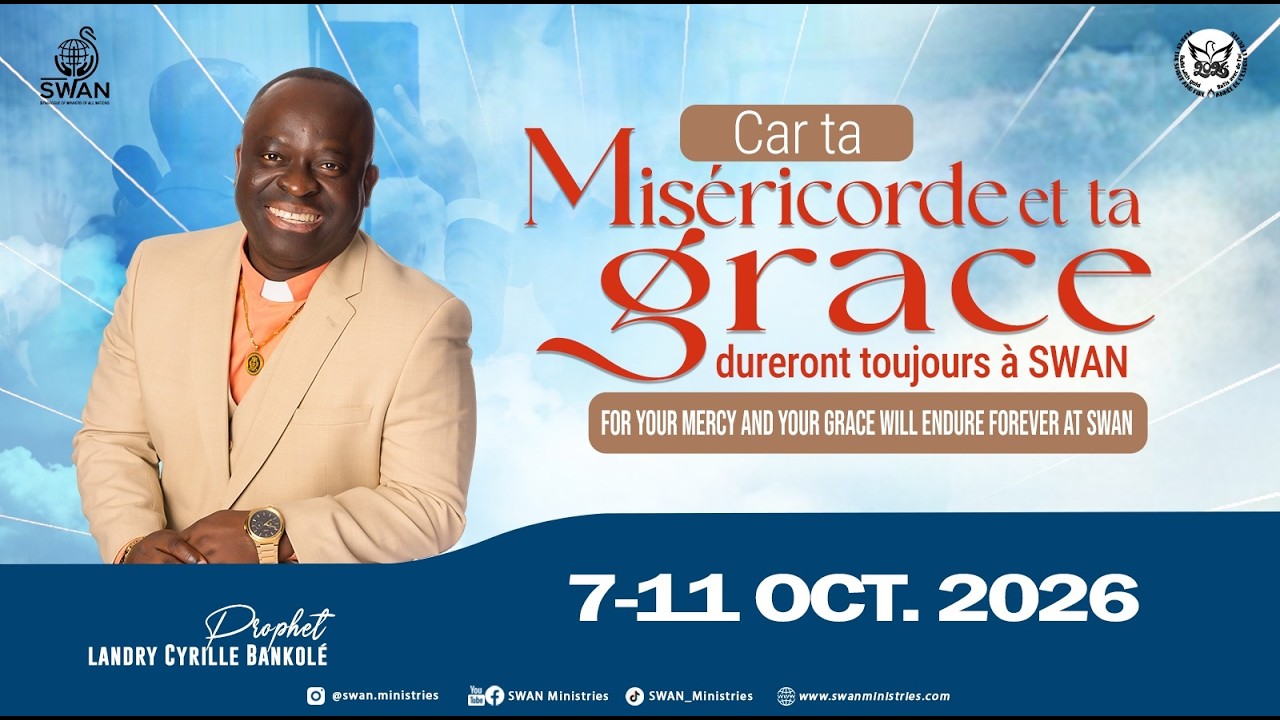
Ministry is not a human ambition. It is a response to a call from the “Heavenly Sovereign.” In this teaching, Apostle Michael Ipoli Felho invites us to rethink our service to God in light of truth, spiritual order, and compassion. He does this through seven key pillars, which we\'ll explore together.
1. Ministry is not a human ambition.
Apostle Michael Ipoli Felho emphasizes that Christian service is not the result of a personal project or a desire for social advancement. It stems from a divine calling, a call from the “Heavenly Sovereign,” which transcends earthly ambitions. Thus, the true minister does not seek his own prestige, but responds to the will of God, who shapes and guides him.
2. Hierarchy and spiritual lineage.
Every minister must be part of a spiritual lineage. Apostle Michael Ipoli Felho explains that “diakonos” refers to a hardworking servant, “ourarates” indicates submission to a higher authority, and “étourquigos” denotes membership in a specific organization. Without this connection to a spiritual father, there is neither blessing, nor protection, nor legitimacy in the ministry.
3. Ministry is a noble calling.
Service to the Kingdom is presented as a noble calling. Although the ministry does not guarantee material prosperity, it demands excellence, integrity, and dignity. A minister must serve with a noble attitude, reflecting the greatness of Christ in every action, whether visible or hidden.
4. Work comes before titles.
Before bearing the titles of pastor, apostle, or prophet, the believer must first carry out the daily ministry of a diakonos. A title never precedes one’s work; it is a recognition of that work after the servant has demonstrated his faithfulness, humility, and dedication on the job.
5. The ministry addresses all of life\'s challenges.
Apostle Michael Ipoli Felho asserts that ministry is the solution God offers to problems related to family, finances, relationships, and reputation. This position draws enemy attacks, but it is also the channel through which God acts, delivers, and restores the lives of those affected.
6. The “Battle of Blood”: A Confrontation with Family Heritage.
The sixth secret reveals that a calling to ministry reawakens inherited wounds passed down through the bloodline: divorces, addictions, traumas, or family feuds. The minister must acknowledge these legacies, confront them, and move beyond them, so that they do not become obstacles to the path God has laid out for him.
7. The call is related to an environment
Finally, every ministerial calling is rooted in a specific context—a community, a region, or a group of believers. The ministry does not thrive “everywhere,” but in the “fertile ground” that God has prepared. Identifying this place and working faithfully there allows the call to bear fruit according to God’s will.
In conclusion, the message from Apostle Michael Ipoli Felho reminds us that true ministry arises from total submission to God, genuine discipleship under our spiritual elders, and an uncompromising daily commitment.
If we choose to put service before status, to embrace our inherited sufferings with faith, and to cultivate our ministry in the place the Lord has prepared for us, we will become powerful channels of His grace: capable of healing, restoring, and proclaiming the kingdom to every generation.


